Chikuma-Shinano River Research Group
Ministry of Land, Infrastructure, Transport and Tourism Research and Development Fund for River Erosion Control Technology (River Ecology) "The Importance of Habitat Continuity in Rivers - Impact Assessment and Conservation Measures for River Ecosystems" (Principal Investigator: Hiroshi Hakoyama)
The Shinano River, Japan's longest river, provides a variety of ecosystem services, but it has also been severely fragmented by dams. Fish catches in the Chikuma and Shinano rivers have declined to 1/100 to 1/1000 of their former levels, raising concerns about the decline of fish populations, which is believed to be due in no small part to habitat fragmentation.
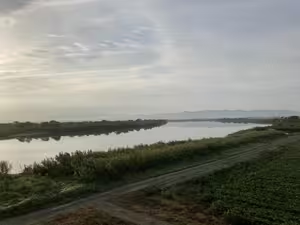
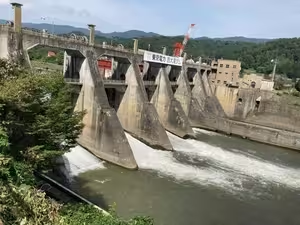
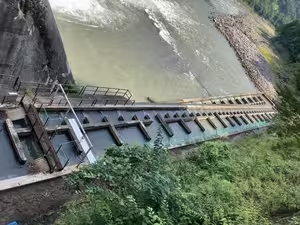
On the other hand, large-scale river disturbances (the damage caused by Typhoon Hagibis is still fresh in our minds) have a major impact on both humans and freshwater organisms. The Chikuma River Bureau of the Ministry of Land, Infrastructure, Transport and Tourism is carrying out flood control measures on the Chikuma River (bank protection, excavation, flood control basins, etc.) while taking into account the river's biodiversity, but there is a need for river ecological engineering research on how to proceed with flood control while taking nature into account.
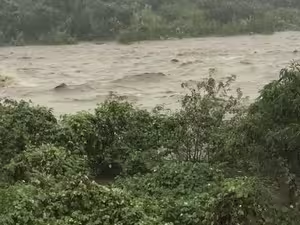
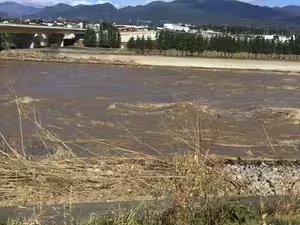
At the Institute of Freshwater Biology, Professor Hiroshi Hakoyama has formed a new group with local researchers (Chikuma River/Shinano River Research Group) and, with a competitive research grant from the Ministry of Land, Infrastructure, Transport and Tourism, is attempting to clarify the impact of river ecosystem disturbance and the presence of river works on habitat continuity and, further, on the health and sustainability of populations and communities.
We are conducting research to understand the habitat connectivity of freshwater organisms, such as fish, and to clarify the effects of river disturbance caused by flooding and river engineering on connectivity, metapopulation structure and persistence, community structure, and interactions among organisms, mainly in the Chikuma River and Shinano River systems and the main streams, tributaries, and irrigation canals in Ueda City. Ultimately, we would like to evaluate the scale at which fish movement needs to be ensured as a system for the entire river basin and make a proposal for the expansion and improvement of fish passages.
| Institution | Researcher |
|---|---|
| Institute of Freshwater Biology, Nagano University | Hiroshi Hakoyama |
| Institute of Freshwater Biology, Nagano University | Sakie Kodama |
| Institute of Freshwater Biology, Nagano University (Tohoku University) | Leanne Faulks |
| Institute of Freshwater Biology, Nagano University (University of Vienna | UniWie) | Alessandra Cera |
| Faculty of Engineering, Shinshu University | Masashi Toyota |
| Faculty of Engineering, Shinshu University | Shoichiro Iio |
| Nagano Prefectural Fisheries Experimental Station | Go Ueshima |
| Nagano Prefectural Fisheries Experimental Station | Norihiko Komatsu |
| Nagano Prefectural Fisheries Experimental Station | Seiya Tashiro |
| Nagano Prefectural Fisheries Experimental Station, Saku Brunch | Takamasa Shinkai |